
VII. The Girl Who Lived with the Dying
- Feb 7
- 2 min read
Updated: Apr 2
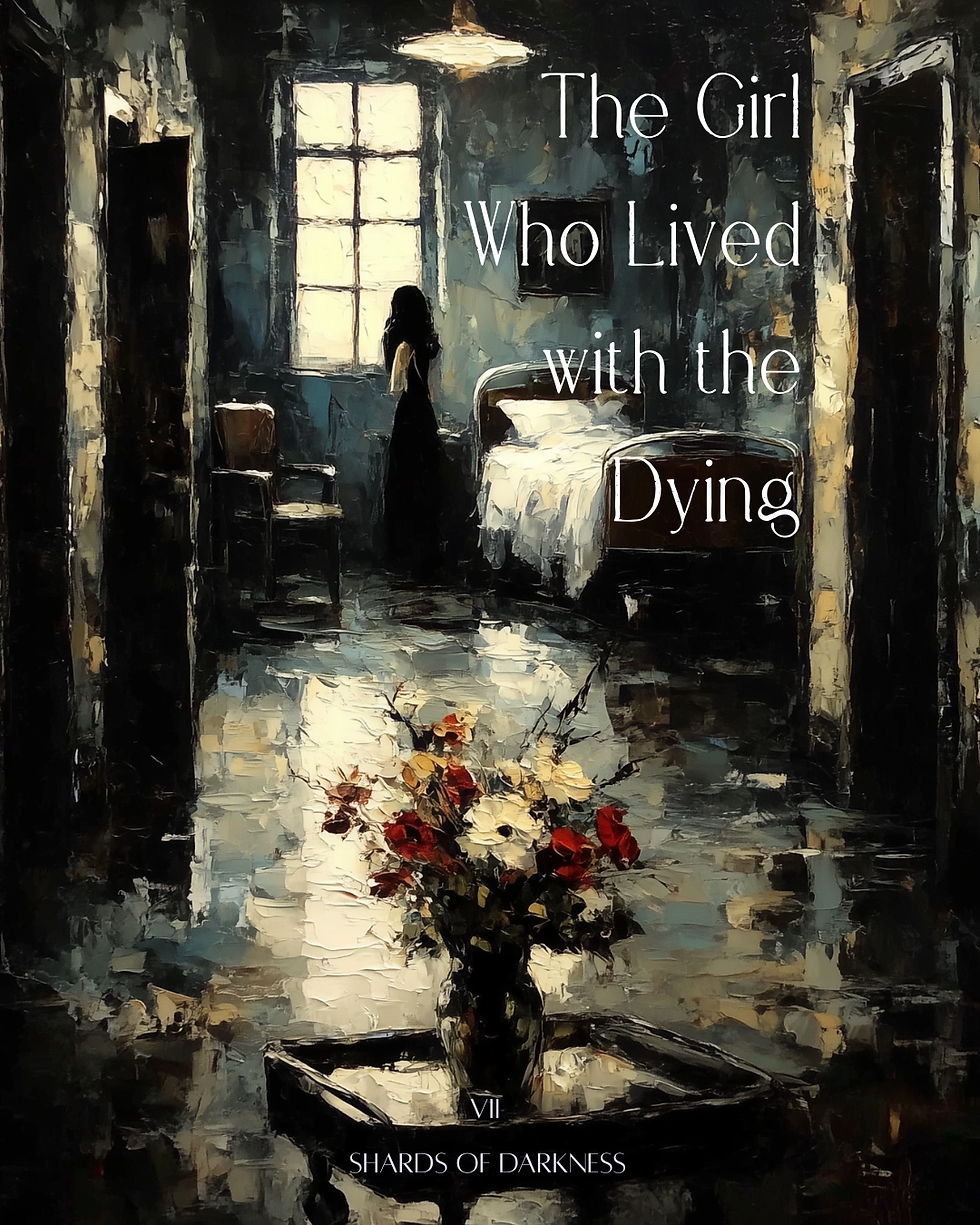
She spent her life in rooms that smelled of bleach and wilted flowers. The hospice was always too warm. The walls were soft yellow, meant to comfort, but they only made the place feel sickly, like the building itself was dying.
She arrived every day after school. No one gave her much attention. She wasn’t a paid assistant, nor was she a registered volunteer. She was just a girl who showed up consistently, quietly moving between the beds, changing water pitchers, holding hands when the families couldn’t bear to stay.
The staff thought she was kind. But it wasn't kindness that drove her. She needed this—the routine of it, the purpose. Each dying breath she witnessed filled a void inside her. The same one that loss had carved out years ago.
She stayed long after visiting hours, her body slow to move from exhaustion, her eyes rimmed red from sleepless nights. Sometimes, when her eyes got too heavy, she’d mistake the dying for the dead before they truly were, and then she would startle awake by a sudden cough or the faintest movement. Sometimes she fell asleep in the chair beside the bed, waking only when the monitors went still. The nurses let her. They said the patients calmed when she was there, that her presence soothed them.
When someone died, she helped clean the room. She folded the sheets, wiped the rails, helped arrange the bed for the next one. Only when she retreated to the privacy of the bathroom did she allow herself to break. Her body would fold in on itself, shaking with the kind of grief that has no sound. She didn’t cry for them. She cried for the part of herself that died with every one of them.
In town, no one asked where she went every day. Her father didn’t care. Her teachers didn’t notice. Her classmates barely remembered her name. The hospice was the only place where her existence seemed to matter, even if the dying were the only ones who felt it.
I watched her from the doorway as she leaned over an old man’s bed, brushing his hair back with a gentle touch. She whispered words of comfort. That it was okay to leave, that he could let go. His breathing slowed, then stopped. She didn’t move. Not for a long time.
There was beauty in her grief, something parasitic in its devotion. She depended on others dying to feel anything at all. Because death was the only place she could put her love without fear of losing it again.
She won’t last here. Her grief will take her piece by piece until there’s nothing left.
The search continues.
M.


